Harper Otto · 4 September 2026
Plorin Library Digitization Effort Connects Wartime Diaries with Postwar Industrial Photography Collection
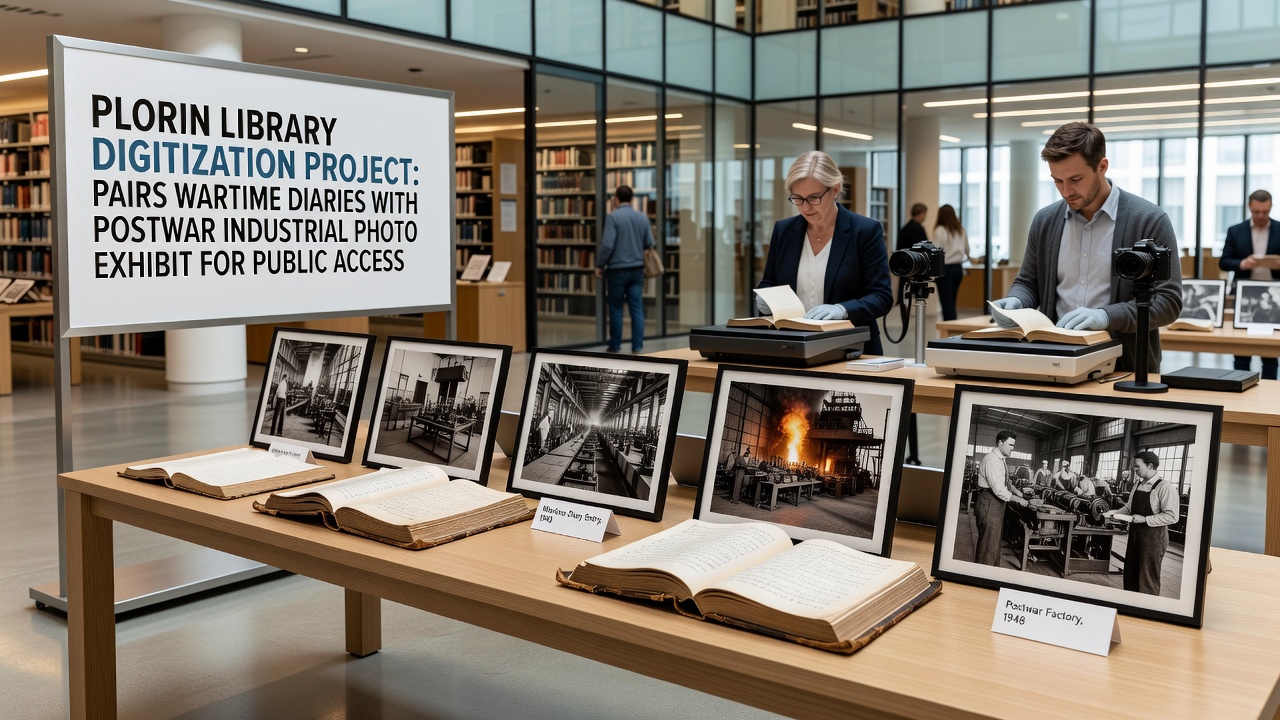
Plorin Library has initiated a digitization project that pairs personal wartime diaries from the mid-twentieth century with a collection of postwar industrial photographs, and the combined materials will become available for public access through an online platform. The effort draws on archival holdings that span personal narratives and visual documentation of industrial recovery in the region, and researchers have noted how these records offer complementary perspectives on historical events. Project coordinators expect the full collection to go live in September 2026, at which point users worldwide can search and view the digitized items without visiting the physical library.
Project Origins and Scope
Library staff began planning the initiative after identifying overlapping themes in two separate collections that had remained largely inaccessible to outside researchers. One collection contains diaries written between 1939 and 1945 by residents of Plorin and surrounding communities, while the other comprises photographs taken in factories and reconstruction sites from 1946 through the early 1960s. Staff members cataloged both sets of materials over several years, and they determined that presenting them together would allow users to trace connections between individual experiences and broader industrial developments. Funding for the digitization came from regional cultural grants, and the library partnered with a university-based preservation lab to handle fragile paper items and glass-plate negatives.
Digitization Process and Technical Standards
Technicians scan each diary page at high resolution while preserving original annotations and marginal notes, and they create metadata records that include dates, authors when known, and geographic references. For the photographs, imaging teams employ calibrated lighting to capture details such as machinery labels and worker safety equipment, and they generate both master files and web-optimized versions. Quality control checks occur at multiple stages, and the library follows international guidelines for file formats and long-term storage. Observers note that the workflow incorporates automated transcription tools for handwritten text, although human review remains essential for accuracy on faded or idiosyncratic scripts.
Content Highlights from the Diaries
The wartime diaries document daily life under rationing, air-raid routines, and shifts in local employment patterns, and several volumes describe the transition from civilian to wartime production in nearby plants. One diary kept by a factory clerk records changes in shift schedules as machinery was repurposed, while another maintained by a schoolteacher tracks community responses to news from the front. Researchers have cross-referenced entries with municipal records, and the resulting data points illustrate how personal observations align with official reports of the period. Access restrictions on certain sensitive passages remain in place until September 2026, when redacted digital versions will join the public release.
The Postwar Industrial Photograph Collection
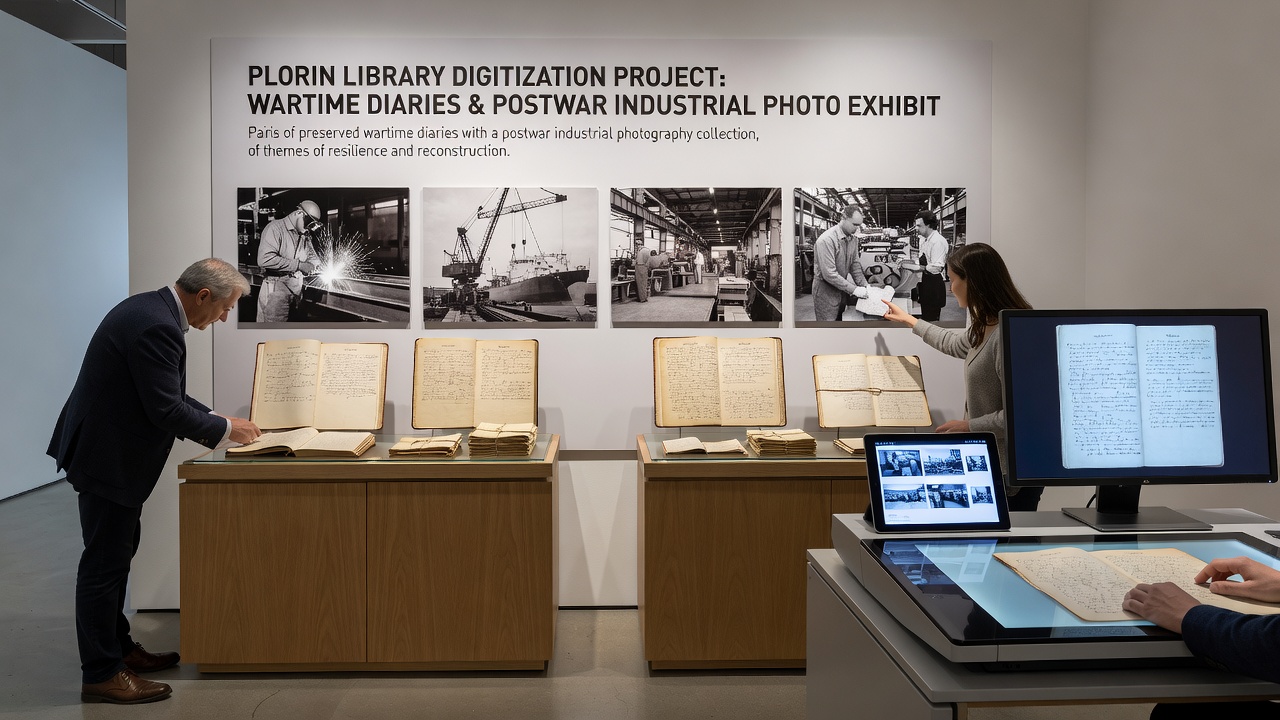
Photographers commissioned by local industry groups captured images of steel mills restarting operations, assembly lines retooling for consumer goods, and workers installing new safety barriers in rebuilt facilities. The collection includes more than 1,200 prints and negatives, many of which show machinery sourced from international suppliers during the recovery years. According to records from the U.S. National Archives, similar photographic documentation exists in other regions that experienced rapid industrial rebuilding, and the Plorin materials add a localized visual record. Metadata for each image lists camera settings, film stock, and original captions when available, and the library plans to add geolocation tags that align with contemporary maps of the area.
Public Access Features and Timeline
Once launched in September 2026, the digital platform will support keyword searches across both collections, and users can filter results by date range, author, or subject category such as food rationing or machinery installation. Side-by-side viewing tools will let researchers compare diary entries with photographs taken in the same months or at nearby locations. The library will offer free registration for advanced features including annotation sharing and download of high-resolution files for educational use. Training sessions for teachers and local history groups are scheduled to begin shortly after the release date, and staff will provide guidance on interpreting handwriting styles common in the diaries.
Related Archival Partnerships
Library staff coordinated with institutions holding complementary materials, and one agreement allows limited cross-linking with records held by the National Archives of Australia, where postwar migration patterns from Europe are documented in oral histories. These connections help place the Plorin collections within wider postwar movements of people and technology. Project updates appear on the library website, and periodic newsletters summarize progress on scanning targets and metadata completion.
Conclusion
The Plorin Library digitization project demonstrates how paired archival collections can illuminate both personal and industrial dimensions of a single historical period, and the September 2026 public release will extend access beyond the reading room. Continued cataloging and user feedback will shape future enhancements, while preservation standards ensure the materials remain available for subsequent generations of researchers.