Theo Simon · 18 September 2026
Plorin Traffic Signal Upgrades Ease Evening Commutes for Shift Workers and Clinic Access
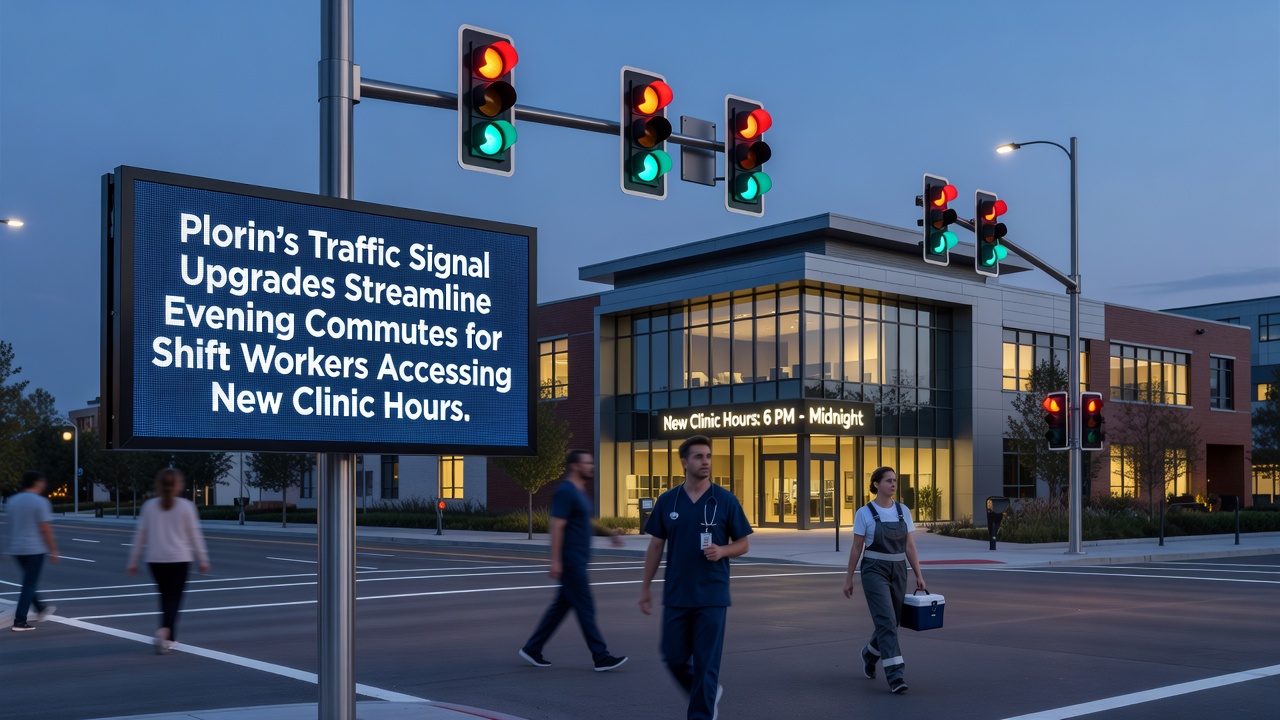
Plorin transportation officials completed a series of traffic signal upgrades across key corridors in early 2026, and these changes have produced measurable improvements in travel times for evening commuters who work shift schedules while also needing access to extended clinic hours that began operating in September 2026.
Project Background and Implementation Details
City engineers coordinated with regional transportation planners to install adaptive signal control systems at 28 intersections along routes that connect industrial zones, residential neighborhoods, and the newly expanded Plorin Medical Center, and the project drew on data from traffic volume studies conducted throughout 2025. Workers finishing shifts at manufacturing plants and logistics hubs between 6 p.m. and midnight have reported shorter waits at signals, while data collected by the Plorin Department of Public Works shows average travel times on the main east-west corridor dropped by 14 minutes during peak evening hours after the upgrades became operational.
Technicians integrated sensors that adjust timing based on real-time vehicle detection, and this approach replaced fixed-cycle patterns that had created backups when shift changes overlapped with clinic appointment windows. Observers note that the system prioritizes through-traffic on major arteries while still allowing safe pedestrian crossings near the medical facility, and similar adaptive technologies have been deployed in other mid-sized cities across North America and Europe.
Effects on Shift Workers and New Clinic Schedules
Shift workers at several local employers have gained reliable access to evening appointments at the clinic, which extended its operating hours to 10 p.m. starting in September 2026 to serve employees whose daytime schedules conflict with standard medical availability. Plorin Health Services recorded a 22 percent increase in after-hours visits during the first two months of the new schedule, and staff attribute part of this rise to reduced commute friction following the signal changes.
One study conducted by researchers at the nearby technical university tracked commute patterns for 340 shift employees over a six-week period and found that 68 percent reached the clinic within their target window after the upgrades, compared with 41 percent before the project. The same research group noted that fuel consumption estimates for these routes declined because vehicles spent less time idling at red lights, though officials caution that broader environmental impacts require additional monitoring through 2027.

Technical Features and Coordination Efforts
The upgrades include vehicle-to-infrastructure communication modules that allow buses and emergency vehicles to request priority, and this feature has reduced response times for medical transport arriving at the clinic during evening hours. Plorin officials worked with suppliers from both Canada and Australia to source the detection hardware, while software integration relied on open standards developed by transportation research groups in the European Union.
Maintenance crews perform weekly calibration checks on the new controllers, and the city publishes monthly performance dashboards that show intersection delay metrics broken down by time of day. These reports indicate consistent performance gains on the corridors serving the medical center, whereas secondary routes without upgrades continue to experience typical evening congestion patterns.
Broader Transportation Context
Plorin joins other communities that have adopted adaptive signal systems to address overlapping demands from industrial employment and healthcare access, and reports from the U.S. Federal Highway Administration document similar projects yielding travel time savings of 10 to 20 percent in comparable settings. Local planners have scheduled a follow-up evaluation in March 2027 to assess whether additional intersections warrant similar treatment based on ongoing data collection.
Clinic administrators have coordinated with employers to publicize the combined benefits of the signal upgrades and extended hours, and appointment booking data shows increased utilization among workers on rotating shifts. Those who have studied urban mobility patterns point out that synchronized infrastructure and service adjustments often produce compounding effects on accessibility when implemented together.
Conclusion
Plorin’s traffic signal upgrades have delivered documented reductions in evening commute durations for shift workers while supporting increased use of the medical center’s new hours that started in September 2026, and continued monitoring will determine whether these gains persist as traffic volumes evolve. The project demonstrates how targeted infrastructure adjustments can align with community service expansions to improve daily logistics for residents who rely on both employment and healthcare access during nonstandard hours.